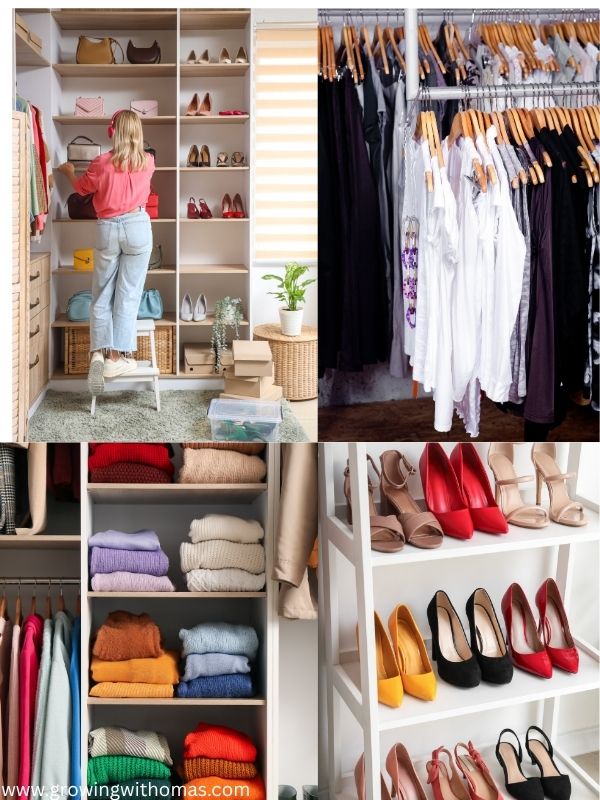
Have you ever wondered how to organize your wardrobe when you have so many clothes but still feel like you have nothing to wear?
A cluttered wardrobe can make getting dressed feel harder than it needs to be, especially when your favorite clothes are hidden at the back or mixed in with things you rarely wear.
Sometimes the problem isn’t that you don’t have enough clothes. The real problem is that your clothes aren’t organized in a way that allows you to see, remember and easily choose what you already own.
When your wardrobe is properly arranged, you can see your clothes more clearly. You remember pieces you haven’t worn in a long time. Then you begin to notice combinations you didn’t think about before. You can look at one skirt and suddenly think, “Oh, I can wear this with that blouse.”
A well-organized wardrobe doesn’t necessarily mean you need a huge closet or expensive storage solutions. It simply means everything has a place, and you can easily find what you need.
What You Will Learn From This Article
By the end of this article, you’ll know how to:
- Remove clothes that no longer belong in your wardrobe.
- Separate your clothes according to type.
- Arrange dresses, skirts, trousers, tops and blazers properly.
- Organize your bags and shoes so they are easy to see.
- Make a small wardrobe easier to use.
- Decide which clothes should be folded and which should be hung.
- Avoid common wardrobe-organizing mistakes.
- Make getting dressed in the morning much easier.
- Use your organized wardrobe to create more outfit ideas.
- Stop feeling like you have nothing to wear when you actually have plenty.
Let’s get into it.
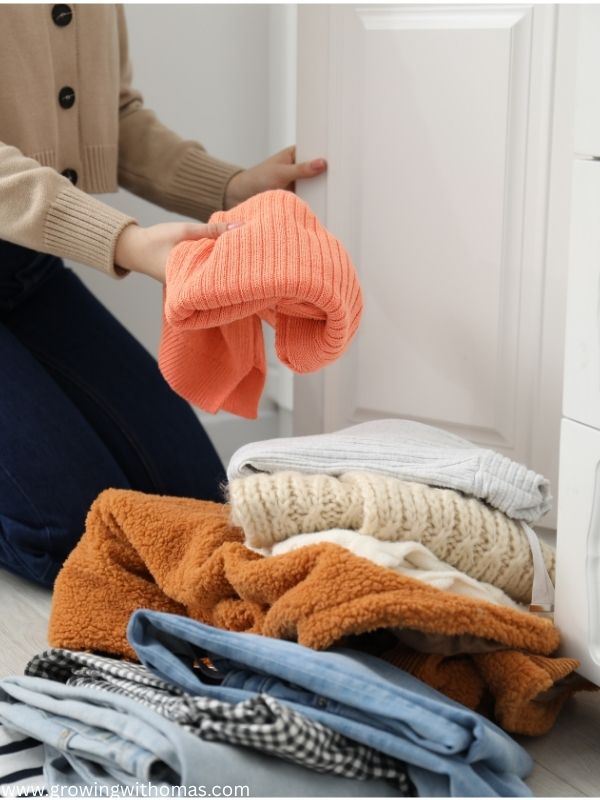
1. Start by Removing Clothes You No Longer Wear
Before you start arranging your wardrobe, don’t simply move everything from one place to another.
First, take everything out and look at what you actually have.
You may discover clothes you haven’t worn in years.
Some may no longer fit. Some may be too old. Others may be damaged or worn out. Also some may simply no longer match your personal style.
There is no point taking valuable wardrobe space with clothes you know you are no longer going to wear.
Ask yourself:
Does this still fit me?
Have I worn this recently?
Do I still like this?
Is it still in good condition?
Would I actually wear this if I saw it today?
If the answer is no, consider removing it from your active wardrobe.
This doesn’t mean you have to throw everything away. You can donate good clothes, give them to someone who needs them or keep sentimental pieces separately if they have special meaning.
The goal is to make your everyday wardrobe easier to use.
2. Separate Your Clothes According to Type
One of the easiest ways to organize a wardrobe is to stop mixing everything together.
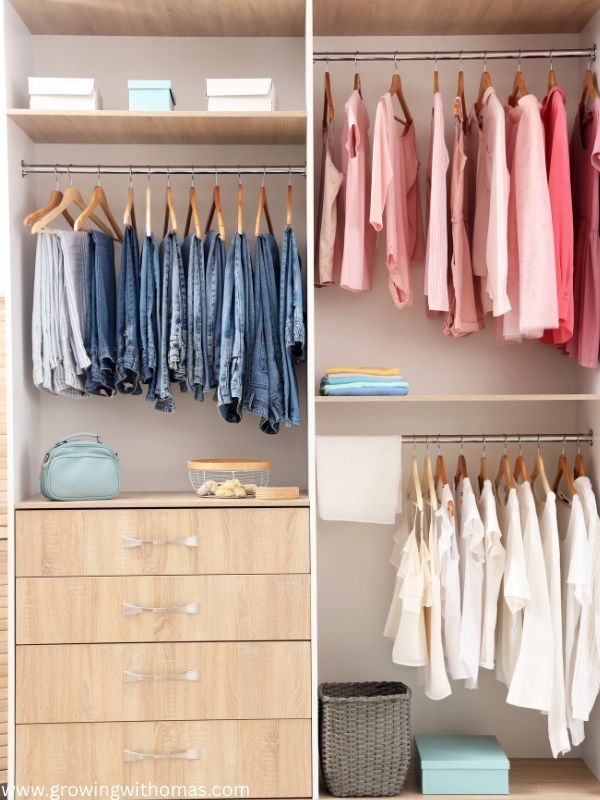
Your dresses should have their own section.
Skirts should have their own section.
Trousers and jeans should be arranged together.
Tops should have their own space.
Your blazers should be together.
This simple system can save you a lot of time.
Imagine waking up in the morning and wanting to wear a dress.
Instead of searching through your entire wardrobe, you already know exactly where your dresses are.
You simply go to that section and choose one.
The same applies to your skirts, trousers, blouses and blazers.
When everything has a particular place, your wardrobe becomes much easier to understand.
3. Hang Clothes That Wrinkle Easily
Not every piece of clothing should be folded.
Some clothes look much better when they are properly hung.
If you have dresses, blazers, chiffon blouses or other clothes that wrinkle easily, consider putting them on hangers.
If a particular outfit needs to be ironed before you wear it, it is better to iron it and hang it rather than fold it into a basket or push it inside a bag.
This way, when you decide to wear it, it is already prepared.
You don’t have to bring it out at the last minute and start looking for an iron.
This is especially helpful for women who have busy mornings.
Your wardrobe should make your life easier, not give you another task every morning.
4. Arrange Your Dresses Together
If you have several dresses, keep them together.
You can arrange them from short to long, by colour or simply according to the type of dress.
For example, you might keep your church dresses together, your casual dresses together and your more formal dresses together.
You don’t necessarily have to create too many complicated categories.
The most important thing is that you can easily see what you have.
When your dresses are visible, you may even rediscover clothes you completely forgot about.
That dress you haven’t worn in months may suddenly become your favourite outfit again.
5. Keep Your Skirts Together
Skirts can easily get lost in a wardrobe when they are mixed with everything else.
Keep your skirts in one section.
You can arrange them according to length, colour or style.
For example, you might have pencil skirts, straight skirts, printed skirts and long skirts.
When you want to wear a skirt, you can immediately see your options.
And this is where organizing your wardrobe starts helping your creativity.
You might see a printed skirt and remember that you have a plain blouse that would look beautiful with it.
Suddenly, you’ve created an outfit without buying anything new.
6. Arrange Your Trousers and Jeans Properly
Your jeans and trousers should also have a designated area.
Depending on the space available, you can fold them neatly or hang some of them.
If your wardrobe has shelves, fold jeans and heavier trousers neatly and stack them in a way that allows you to see them.
Don’t create extremely high piles that force you to pull everything out whenever you need something from the bottom.
If you have hanging space, trousers that wrinkle easily can be hung.
The goal is accessibility.
You shouldn’t have to destroy your entire wardrobe just to find one pair of trousers.
7. Keep Your Tops Together
Your tops, blouses, camisoles and shirts can have their own section.
If you have a lot of tops, you can further organize them by colour or occasion.
For example, work or church blouses can be placed together, while casual tops can have another section.
But don’t make your organization so complicated that it becomes difficult to maintain.
The simplest system is often the best.
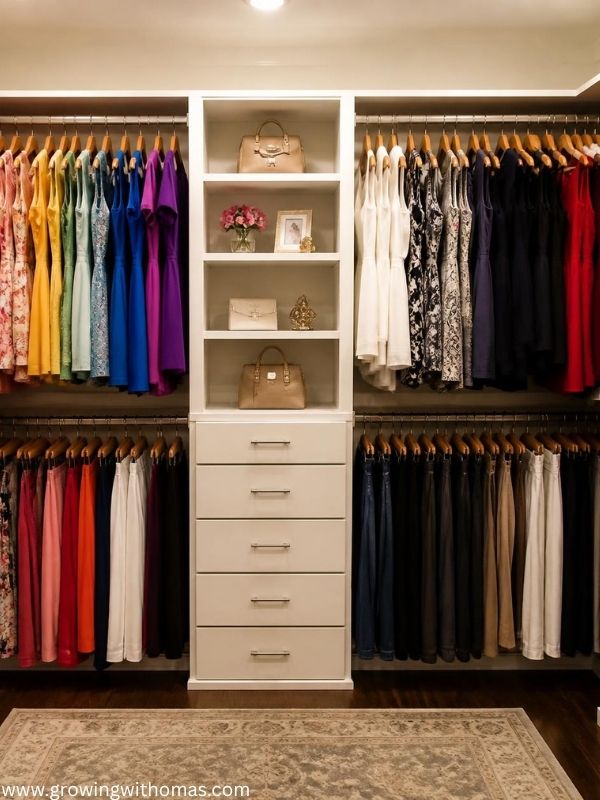
8. Give Your Blazers Their Own Space
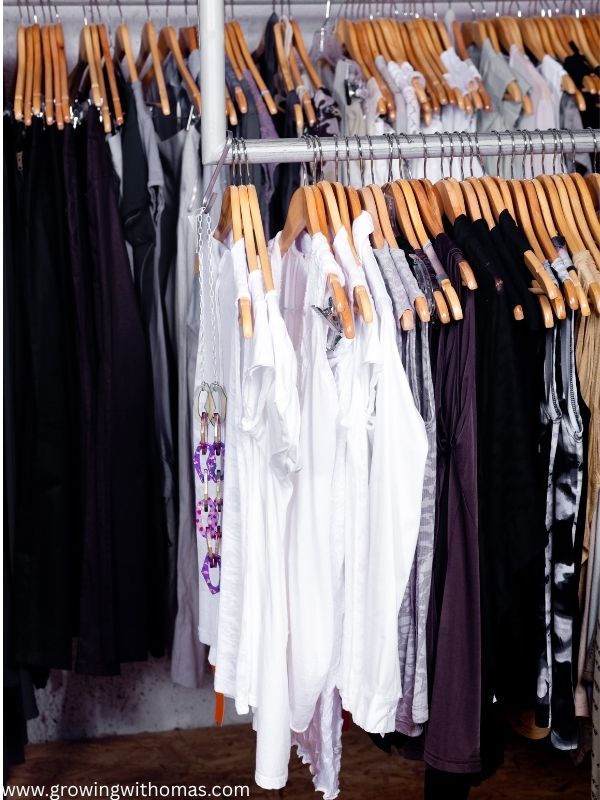
Blazers are better hung than folded, especially if you want them to maintain their shape.
Arrange your blazers together.
If you have different colours, you can organize them from neutral colours to brighter colours.
For example, you might keep black, beige and cream together before moving into brighter colours.
This can make choosing a blazer much easier when you’re getting dressed.
And because you can see all of them at once, you may realize that one blazer can be worn with several different outfits.
Once your blazers are organized, you can get more use out of them with these How To Style A Blazer: Easy Outfit Ideas For Every Occasion
9. Don’t Forget Your Shoes
A wardrobe isn’t only about clothes.
Your shoes also need organization.
Avoid throwing all your shoes into one large pile where you can’t see them.
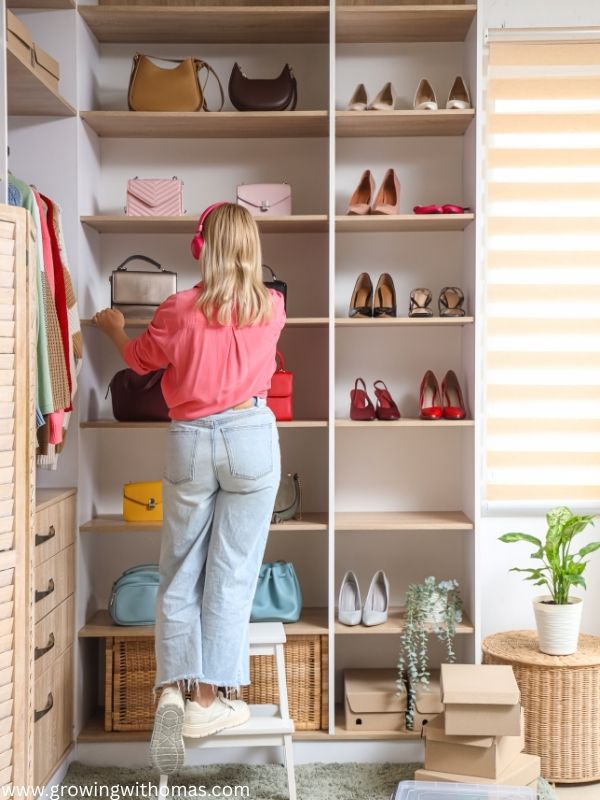
Arrange them in pairs and keep them somewhere clean and visible.
If you have shelves, use them.
If you have limited space, you can use a shoe rack or another practical storage solution.
Keep frequently worn shoes where they are easy to reach.
Less frequently worn shoes can be stored in another section.
When your shoes are visible, you can easily choose one that complements your outfit.
You might look at your clothes and think, “This outfit would look better with my black heels,” rather than simply wearing the first pair you see.
If you want to make choosing shoes easier, check out my guide to Shoes That Go With Almost Every Outfit: Five Pairs Every Woman Should Own.
10. Organize Your Handbags Too
Your handbags shouldn’t be forgotten.
Keep them together rather than placing them randomly around your room.
If you have enough space, arrange them by size or colour.
For example, you could keep your everyday bags together, while smaller evening bags and special-occasion handbags have their own section.
You can also place smaller bags inside larger ones when appropriate, provided this doesn’t damage their shape.
The important thing is to make sure you know where everything is.
11. Make Your Small Wardrobe Work for You
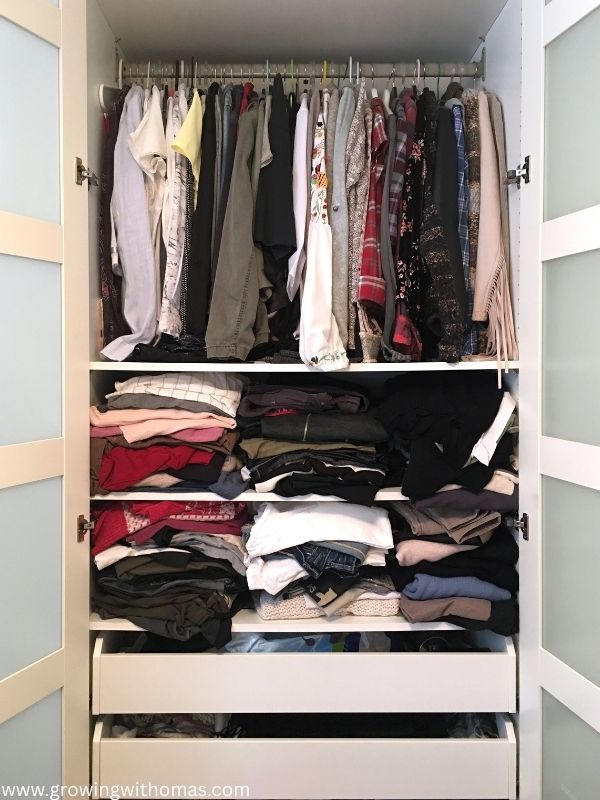
You don’t need a huge walk-in closet to have an organized wardrobe.
If your wardrobe is small, you simply need to use the available space wisely.
Prioritize the clothes you wear most often.
Clothes that wrinkle easily should be hung.
Items that can be folded should be folded neatly.
Avoid keeping unnecessary clothes in your main everyday space.
You can also rotate seasonal or less frequently worn pieces if your storage space is limited.
The key is to avoid overcrowding.
When every piece is squeezed tightly together, it becomes difficult to see what you have.
12. Keep Your Most-Used Clothes Easy to Reach
Think about your lifestyle.
What do you wear most often?
If you attend church regularly, make sure your church outfits are easy to access.
Then work during the week, keep your work clothes organized where you can reach them easily.
If you frequently go out casually, make sure your everyday clothes aren’t buried underneath clothes you rarely wear.
Your wardrobe should be organized around your real life.
There’s no point arranging it beautifully in a way that doesn’t work for you.
If you’re wondering which pieces are worth keeping in your wardrobe, take a look at my guide to 10 Wardrobe Essentials Every Woman Should Own.
13. Use Visibility to Create Outfit Ideas
This is one of the biggest benefits of organizing your wardrobe.
When your clothes are visible, you begin to see possibilities.
You may look at one blouse and realize that it can go with three different skirts.
You may find a blazer you forgot you had and realize that it can transform your jeans and top into a more polished outfit.
Also may see a pair of shoes and remember an old dress that would look beautiful with them.
This is why organization can actually improve your personal style.
You’re not simply arranging clothes.
You’re making your wardrobe easier to use creatively.
14. Don’t Keep Everything in Bags and Baskets
One of the biggest problems I see with overcrowded wardrobes is hiding clothes.
When clothes are packed into large bags, baskets or piles, you may forget what you have.
Then months later, you discover something and say:
“I didn’t even remember I had this!”
That’s because it wasn’t visible.
Of course, some clothes can be stored away when necessary, especially pieces you don’t use frequently.
But your everyday wardrobe should contain the clothes you actually want to see and wear.
Visibility makes a difference.
15. Avoid Mixing Everything Together
One of the biggest wardrobe mistakes is putting everything in one place.
Dresses with tops.
Tops with skirts.
Jeans with blazers.
Shoes mixed together.
Bags thrown into a corner.
This may save you a few minutes when you’re putting things away, but it can cost you much more time when you’re trying to get dressed.
You may wake up in the morning and immediately think:
“What am I going to wear?”
Not because you don’t have clothes, but because your wardrobe isn’t organized enough to help you make a decision.
16. Make Your Wardrobe Easy to Maintain
An organized wardrobe shouldn’t stay organized for only one day.
You need a system that you can maintain.
After wearing something, try to return it to its proper place.
If something is dirty, put it in the laundry rather than putting it back into your wardrobe.
When something needs ironing, don’t hide it away and forget about it.
If you buy something new, decide where it belongs before adding it to your wardrobe.
Small habits prevent your wardrobe from becoming chaotic again.
A Simple Wardrobe Organization System
If you’re overwhelmed and don’t know where to start, don’t try to organize everything in one minute.
Take it section by section.
Start with your dresses.
Then move to skirts.
Next trousers and jeans.
Then tops and blouses.
Blazers.
Shoes.
Finally, organize your handbags and accessories.
As you go, remove anything that no longer fits, is badly worn or that you know you won’t wear.
You will gradually see the difference.
How an Organized Wardrobe Can Improve Your Morning
Imagine waking up in the morning.
You walk to your wardrobe.
You open it.
Instead of seeing clothes everywhere, you see your dresses arranged neatly.
Skirts are together.
Tops are visible.
Blazers are hanging.
Shoes are arranged.
Your handbags are in their place.
You take five to ten seconds to look at everything.
And suddenly, you have an idea.
“I’ll wear this skirt with that blouse, my black heels and this handbag.”
That’s the beauty of an organized wardrobe.
It gives your mind room to think.
You don’t spend twenty minutes searching for something you forgot you owned.
Feeling like you have nothing to wear.
You can actually see what you have.
Final Thoughts
Having a lot of clothes doesn’t automatically mean you have a functional wardrobe.
Sometimes, the reason you feel like you have nothing to wear is simply because you can’t clearly see what you already own.
Organizing your wardrobe allows your clothes to become visible.
It helps you remember what you have, discover forgotten pieces and create new outfit combinations.
You don’t have to buy a new wardrobe or spend a lot of money.
Start with what you already have.
Remove what you no longer wear.
Separate your clothes according to type.
Hang the pieces that need to be hung.
Fold what can be folded.
Arrange your shoes and handbags.
And most importantly, create a system that works for your everyday life.
Because when you wake up in the morning and can open your wardrobe, take a five-to-ten-second look and immediately know what you want to wear, you’ll realize that you probably didn’t need more clothes—you simply needed a more organized wardrobe
Frequently Asked Questions
How often should I organize my wardrobe?
There isn’t one fixed rule. However, you can do a quick check regularly and carry out a more thorough organization whenever your wardrobe starts becoming difficult to use.
Should I arrange my clothes by colour or by type?
Start by arranging them by type because it makes finding things easier. Once you’ve separated dresses, tops, skirts and trousers, you can organize each category by colour if that works for you.
Should clothes be folded or hung?
It depends on the fabric and type of clothing. Clothes that wrinkle easily, such as some dresses, blazers and blouses, are often better hung. Jeans, knitwear and some casual clothes can be folded.
What should I do with clothes that don’t fit anymore?
If they are no longer useful to you, consider donating them, giving them away or removing them from your everyday wardrobe. Keeping too many clothes that you cannot wear can make your wardrobe unnecessarily crowded.
How can I organize a small wardrobe?
Use the available space carefully, prioritize clothes you wear regularly, fold items that can be folded, hang clothes that wrinkle easily and avoid keeping unnecessary items in your everyday storage area.
Do I need expensive wardrobe organizers?
No. Good organization is more about having a simple system and consistently putting things back where they belong than buying expensive storage products.
I hope you enjoyed reading this article. If you found it helpful, be sure to explore more practical tips and inspiration here on Growing With Omas. There’s always something new to learn and try.🌿